Introduction & Game Overview
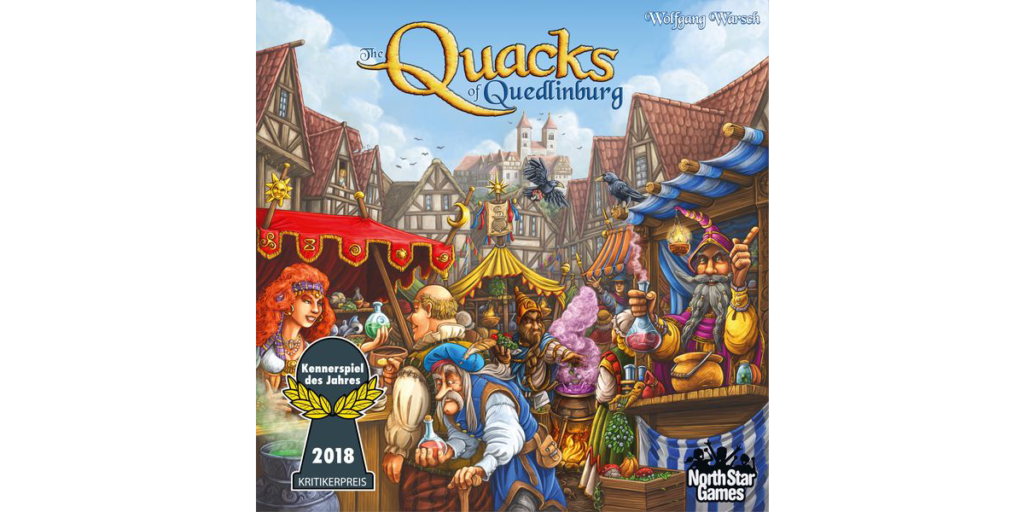
Ever wanted to sell a potion that cures everything? Or at least one that sounds like it does? In The Quacks of Quedlinburg, you play a quack doctor who brews medicine based on rumours. It is silly. It is tense. And it can blow up in your face.
This Quacks of Quedlinburg review covers how the game works, what is great and where it falls short. By the end, you will know if it fits your game table.
What Is The Quacks of Quedlinburg?
You are a quack in the town of Quedlinburg. You mix potions from ingredients and try to impress the crowd. The game lasts nine rounds. The player with the most points at the end wins.
The theme is light and funny. Alchemists, dodgy medicine and a lot of bubbling pots. Nobody takes it too seriously, and that is part of the charm.
How It Works: A Quick Rules Summary
Bag Building & Pulling Ingredients
Every player has their own bag full of ingredient tokens. Each round, you pull one token at a time and place it in your pot. Each token adds value to your brew.
That is the whole core loop. Pull. Place. Decide if you dare to pull again. It takes about two minutes to teach, and then everyone gets it.
The White Cherry Bombs & Pot Explosions
Here is where the fun starts. Some tokens are white cherries, also called cherry bombs. Pull too many, and your pot explodes.
You can stop at any time. Stop early and you stay safe, but you score less. Keep going and you can score more, but boom is always one pull away. In the rules, the pot explodes once the white cherries in it add up to more than seven.
If your pot explodes, you are not out of the game. You just have to choose: take the points or buy new ingredients. Not both. That stings, and it is hard not to laugh when it happens to someone else.
Buying New Ingredients & Variable Set-Ups
When your round ends, you spend your coins on new ingredients. These go into your bag. Over the nine rounds, your bag gets better, and your draws get stronger.
This is called bag building. Your choices shape what you can pull next. The game also uses a variable set-up, so not every game plays out the same way.
Who Is It For?
Ideal Player Count & Audience
Quacks suits families and friend groups who like tension, luck and light strategy. It plays with 2 to 4 players, and the age rating is 10+. It also works well as a party game, since the pot explosions make a lot of noise at the table.
If you like pushing your luck, you will feel right at home. Gamers who enjoy a good gamble will be happy here.
Who Should Pass?
If you hate luck, skip this one. If you want full control and deep tactics, this is not your game. You will spend the whole night annoyed at a bag of tokens.
Why Quacks Succeeds
Thrilling Balance of Risk and Reward
Every pull is a small choice. Safe or bold? Stop now or go again? Those choices are easy to understand, but hard to make. That is a good sign for any game.
The tension is real. Everyone leans in when someone has a few white cherries in their pot. Then the crowd goes quiet. Then someone draws one more.
High Replayability with Variable Set-Ups
The variable set-up keeps things fresh. Your bag grows in a different way each time, and so does your plan. You also get to build something over time, which makes each round feel like it matters.
Accessible and Fast-Paced for Families and Parties
At about 45 minutes, a game does not drag. The rules are simple. With a complexity of about 1.9 out of 5, it sits well below the heavy strategy games. That makes it a great pick for new players.
Players also give it a score of around 7.8 out of 10. That is a strong number for a game this easy to learn.
Drawbacks & Potential Frustrations
Heavy Reliance on Luck & Draw Variance
Luck plays a big part. You can plan well and still pull three white cherries in a row. It can feel unfair when one player has a bad round and others sail past.
The good news is that the buying part gives you some control. But the bag always has the last word.
High Risk Sensitivity
The game rewards people who enjoy taking risks. If a player hates losing a round to a bad pull, the fun can fade fast. Know your group before you buy.
How Does Quacks Compare to Similar Games?
Quacks of Quedlinburg vs. Can’t Stop & Port Royal
Can’t Stop is a cleaner push-your-luck game that uses dice. Port Royal does the same with cards. Both are about knowing when to stop.
Quacks adds something on top. Your bag grows stronger as you play. So you are not just pushing your luck. You are also building something for later rounds.
Quacks of Quedlinburg vs. Clank!
Clank! mixes deck building with risk. Quacks mixes bag building with risk. Both let you improve what you draw from over time.
The main difference is feel. In Quacks, the risk is the heart of every round. It is the whole show.
Quacks of Quedlinburg vs. Sagrada
Sagrada is a dice-drafting game with patterns. It has less luck per turn. You can plan more and control more.
Quacks is the opposite. It is wilder, louder and less predictable. Pick Sagrada for calm thinking. Pick Quacks for a good laugh.
Final Verdict
The Quacks of Quedlinburg is easy to learn, quick to play and full of tension. It mixes push-your-luck and bag building in a way that works well for families and friend groups.
It is not a game for those who want control. Luck decides a lot. But if you can laugh when your pot blows up, this one is a keeper.
Who Should Play It?
Play it if you like light games with a good dose of drama. Play it if you want something new players can learn in minutes. Skip it if you want deep tactics and no luck at all.
Frequently Asked Questions (FAQ)
Is The Quacks of Quedlinburg hard to learn?
No. It has a complexity of about 1.9 out of 5 and an age rating of 10+. You pull tokens from a bag and decide when to stop. Most people get it after a round or two.
How many players can play Quacks, and how long does a game take?
The game plays 2 to 4 players. A game lasts about 45 minutes across nine rounds.
What happens if your pot explodes in Quacks of Quedlinburg?
You are not out of the game. If the white cherries in your pot add up to more than seven, the pot explodes. You then choose between taking victory points or buying new ingredients that round. You cannot do both.
Is Quacks of Quedlinburg too luck-based?
It has a lot of luck. That is part of the design. If you like risk, it is a joy. If you want full control, look at a game like Sagrada instead.
Is it a good family game?
Yes. It is easy to learn, fast to play and built around a funny theme. It works best for families and groups who like a little tension and a lot of laughs.
Buy at AmazonKey Details & Specifications
| Detail | Info |
|---|---|
| Designer | Wolfgang Warsch |
| Publisher | Schmidt Spiele (Germany), North Star Games (US/UK market) |
| Year | 2018 |
| Players | 2–4 |
| Playing time | About 45 minutes |
| Age | 10+ |
| Complexity | About 1.9 out of 5 |
| Player score | Around 7.8 out of 10 |
Editorial Disclosure: Cubesalad is reader-supported. When you buy through links on our site, we may earn an affiliate commission at no extra cost to you. Read more.