
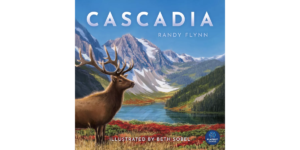
What is Cascadia?
Cascadia is a game about building your own little patch of wild nature. You draw tiles. You place animals. Nobody gets eaten, and nobody throws the board across the room.
This board game review covers how the game plays, what it does well and where it falls short. We also compare it to Harmonies, Azul, Calico and Kingdomino.
The short version: it is easy to learn, nice to look at and very relaxed. If you want a good fight with your friends, keep reading, because this may not be your game.
How itWorks
Every player builds their own landscape from hex tiles. The goal is simple: score the most points by the end of the game.
Pick a Pair
On your turn, you pick one pair. Each pair has one terrain tile and one animal token. You choose from the options that everyone can see.
That is open drafting. You also keep an eye on what your neighbours might want.
Build Your Landscape
Next, you add the terrain tile to your landscape. Then you place the animal token on a tile where it fits.
That is the core of every turn. Take a pair, place a tile, place a token. It is a great rule set to teach, because you can explain it in a few minutes and then just start playing.
Where the Points Come From
Points come from two places. The first is your terrain. Big, connected areas of the same nature type are worth more.
The second is the animals. Scoring cards tell you which animal patterns pay off. These cards change from game to game, so you never score the same way twice in a row.
This is where the pattern building and set collection come in. You are always asking the same question: where should this animal go to make the most of my landscape?
Why Cascadia Is Good
Easy to Learn
With a weight of about 1.9 out of 5, Cascadia sits at the light end. But I´ll say its actually easier to learn than the weight score implies. As many games the learning and the “playing the game well” is two different things. So here I´ll say that learning is very easy. Playing well is a bit trickier.
I like to keep an eye on that weight scale, and this score feels right when combining learning and playing well.
You do not need a rule book open on the table all night.
The age recommendation is 8+. That makes it a good pick for families and for people new to modern board games.
Lots of Replay Value
There are five different animal species in the game. Each one scores in its own way, and the scoring cards change per game.
So one game you chase long chains of one animal. The next game you may want them in small groups. Same box, new puzzle.
It Looks Great
Cascadia has lovely components. The tiles and tokens make your landscape look like a tiny nature park as it grows. That does a lot for a game that is all about building something pretty.
Good for Strategy Beginners
The game rewards planning, but it does not punish you for every small mistake. It works as a family-friendly strategy game, and that is a rare mix. You get real choices without a long headache.
Where Cascadia Falls Short
It Is Mostly a Parallel Puzzle
Cascadia has relatively little direct interaction. You work on your own landscape. Your neighbour works on theirs.
Some people will say it feels like everyone is doing a puzzle at the same table. They are right. If you love to block, steal or tease your friends with big moves, you will want more bite than this.
The Pair Can Limit Your Plans
You always take a tile and a token together. Sometimes the animal you need comes with the wrong terrain. Then you have to adjust your plan.
Some players enjoy that little squeeze. Others find it a bit annoying. It is worth knowing before you buy.
Cascadia vs Similar Games
Cascadia has a lot of friends on the shelf. Here is how it stacks up against four of them.
Cascadia vs Harmonies
Both games mix tile placement with animal habitats. Harmonies adds a little more visual layering to its puzzle.
Cascadia keeps things flatter and simpler to read.
Read our full review of Harmonies here.
Cascadia vs Azul
Azul is also about drafting tiles and building patterns. The big difference is the theme. Azul is abstract. Cascadia gives you a nature setting, and that makes the whole table feel a bit friendlier.
Cascadia vs Calico
Don´t get fooled by the cute looks of cats cosying up. Calico is in my opinion not lighter than Cascadia. It follows the same structure of low rule set. But is harder to master and more abstract. It is a pattern puzzle at heart. Cascadia has more going on thanks to its animal scoring cards and terrain areas. but Cascadia is easier to get to the table.
Cascadia vs Kingdomino
Kingdomino is a very easy domino-style tile drafter. It is a great first step for young players. Cascadia is the natural next step when you want a little more thinking in the same style.
Who Should Play it?
Great for Families and New Players
If you have kids or friends who think board games mean Monopoly, this is a good way to change their minds. The rules are short. The theme is warm. Everyone can follow along.
Great for Fans of Puzzle Games
If you like Azul-style puzzles, you will probably feel right at home. You get tidy choices, clear goals and a good feeling when a plan clicks.
Has a Solo Mode
It is listed with a solo mode, so you can play it on your own. That is handy when the rest of the house has other plans.
Not Ideal for Everyone
Skip it if you want conflict, long games or very high complexity. It is gentle, short and light by design.
Final Verdict: Should You Play it?
Yes, if you want a relaxed puzzle with nice art and rules you can teach in minutes. It scores around 7.9 out of 10 for a reason.
It is best with families, new players and fans of tile-drafting games. It is less of a fit for people who want direct player conflict.
For a 30–45 minute game, it does a lot right. Just remember that you are building your own landscape, and mostly minding your own business.
Frequently Asked Questions About Cascadia
How many players can play it?
Cascadia supports 1–4 players. It is listed with a solo mode, so you can also play it alone.
How long does a game of Cascadia take?
A game takes about 30–45 minutes.
Is it easy to learn?
Yes. It has a weight of around 1.9 out of 5 on BGG. The age recommendation is 10+. Each turn is the same: take a tile and token pair, then place both.
How is Cascadia different from Azul or Calico?
All three involve tile placement and patterns. Azul has an abstract theme. Calico is lighter and more abstract. Cascadia adds a nature theme, five animal species and scoring cards that change from game to game.
Is it good for families?
Yes. It is easy to learn, looks great and has a family-friendly strategy level. It is not a very interactive game, so it suits groups who enjoy building their own thing side by side.
Buy at AmazonCascadia Key Facts
| Detail | Info |
|---|---|
| Players | 1–4 |
| Playtime | 30–45 minutes |
| Recommended age | 10+ |
| Designer | Randy Flynn (also listed as Randy Farnsworth in some sources) |
| Publisher | Flatout Games / AEG |
| Released | 2021 |
| BGG rating | Around 7.9 / 10 (30,000+ ratings) |
| BGG complexity | Around 1.9 / 5 |
| Categories | Animals, Environmental, Territory Building |
| Mechanics | Tile Placement, Pattern Building, Set Collection, Open Drafting, Solo / Solitaire Game |
| Theme | Pacific Northwest: nature, forests, rivers and wildlife |
Editorial Disclosure: Cubesalad is reader-supported. When you buy through links on our site, we may earn an affiliate commission at no extra cost to you. Read more.