Board Games for Beginners: 10+ Great Games to Start With
Looking for Board Games Beyond Monopoly and Scrabble?
Grab a chair. Let me teach you something. I love this part.
You want to get into modern board games. Good. But where do you start? There are hundreds of games out there. Long rulebooks. Weird words like “deck building” and “worker placement.” It’s a lot.
I get it. It looks intimidating from the outside. People hear “area control” or “legacy game” and their eyes glaze over a bit. Fair enough.
Here’s the thing though. Board games don’t need to be complicated to be good. That’s actually a myth. Some of the best games ever made teach in under five minutes.
Modern board games come in all shapes. Quick social games. Team-based co-op games, where everyone plays together against the game itself. Strategic puzzles. Competitive races. Even campaign games that change every time you play, called legacy games.
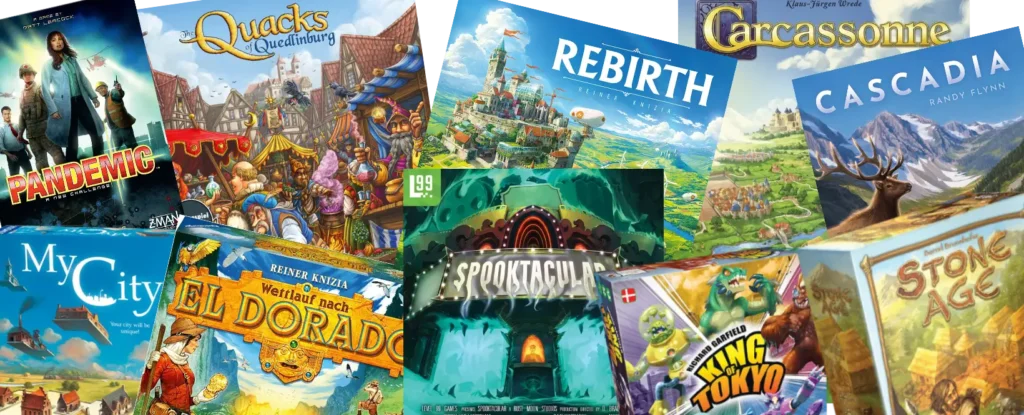
There’s no single “best” board games for beginners pick. It depends on what kind of fun you’re chasing. So below, I’ve picked 11 games. Each one teaches something different about this glorious hobby.
What Makes a Good Beginner Board Game?
Before we dive in, let’s talk criteria. This is the stuff I think about when teaching new players.
Simple rules. You should understand your turn fast. No fifteen-page rulebook required.
Low rules overhead. Few exceptions. Few “but wait, actually” moments.
Meaningful decisions. Easy doesn’t mean boring. Your choices should matter.
Reasonable playtime. 15 to 60 minutes is the sweet spot for a first game.
Good interaction. You should feel how your choices affect other players.
Replayability. A good beginner game still feels fresh on play number ten.
A path forward. It should teach ideas you’ll use again in bigger, heavier games.
Games that hit these marks make good beginner board games. Not just easy games. Good ones.
How to Use This List
The complexity ratings are approximate, not gospel. Use the “Best For” column as your compass instead.
Higher complexity doesn’t mean “not for beginners.” It just means a bit more to chew on. Some beginners love that.
The Quacks of Quedlinburg
At a Glance
Players: 2–4 · Playtime: ~45 min · Age: 10+ · Complexity: ~1.94/5 Mechanics: Bag building, push-your-luck, simultaneous play, set collection
How It Works
You draw ingredient chips from your own bag. Each one boosts your potion. But draw too many cherry bombs, and boom. Your potion explodes.
Then you decide. Stop now, or push your luck one more draw? That question never gets old.
Pros and Cons
The core loop is dead simple. The risk-and-reward decisions are genuinely exciting. Everyone plays at the same time, so nobody sits around waiting. It also sneaks in “bag building,” which is just a fancy way of saying you slowly build a better bag of chips over time.
On the downside, luck plays a big role here. If you hate push-your-luck games, this might frustrate you. There’s also more strategy hiding under the surface than it first looks.
My Take
I love teaching this one. The tension of “just one more draw” gets a room buzzing every single time. It’s a great pick if you want more strategy than a typical family game, without jumping into the deep end.
Carcassonne
At a Glance
Players: 2–5 · Playtime: 30–45 min · Age: 7+ · Complexity: ~1.9/5 Mechanics: Tile placement, area majority, pattern building
How It Works
Draw a tile. Connect it to the map. Maybe place a little wooden person, called a meeple, to claim a road or city. Simple as that.
The map grows as you play. You’re literally building the world together, turn by turn.
Pros and Cons
It’s very easy to teach. The turns make sense right away. It plays great from two players up to five. Final scoring can feel a bit confusing the first time, though, especially with fields. And yes, it’s more competitive than it looks. People get territorial fast.
My Take
This is a classic board games for beginners pick, and for good reason. I’ve taught Carcassonne more times than I can count. It’s perfect for quiet strategy lovers who don’t want dice deciding their fate.
Rebirth
At a Glance
Players: 2–4 · Playtime: ~45–60 min · Age: 10+ · Complexity: ~2.0/5 Mechanics: Hex tile placement, area majority, set collection, objectives
How It Works
Draw a tile. Place it. Build connections around castles. Grow farms and settlements. Complete objectives tied to towers and cathedrals. Score points as you go, and again at the end.
Pros and Cons
The turn structure stays simple throughout. Scoring is clear, even with several moving pieces. It’s more strategic than it first appears, so give it a little patience. It’s also a touch quieter than some other beginner games. Less chaos, more thinking.
My Take
Think of Rebirth as the bridge between family games and proper Eurogames. It teaches spatial competition and long-term planning, but never punishes you for a messy turn structure.
Spooktacular
At a Glance
Players: 1–5 · Playtime: ~45 min · Age: 12+ · Complexity: ~2.0–2.1/5 Mechanics: Variable player powers, movement, set collection, light combat
How It Works
Each player controls a monster with its own powers. Move around a theater map. Chase objectives, collect sets, bump into other monsters along the way.
Pros and Cons
The theme is strong and fun. It supports solo play too, which is handy on a quiet night. Each character feels genuinely different to play. On the flip side, there’s a bit more rules overhead than the simplest games here, since every character works differently.
My Take
This is a great intro to asymmetric games, where each player has a different toy box to play with. Nobody learns a whole new game, but everyone feels unique. A fun stepping stone toward bigger character-driven games.
The Quest for El Dorado
At a Glance
Players: 2–4 · Playtime: 30–60 min · Age: 10+ · Complexity: ~1.9/5 Mechanics: Deck building, hand management, racing, modular board
How It Works
You start with a small deck of cards. Cards let you move or buy new, better cards. The board is made of jungle terrain. Everyone races toward El Dorado.
Pros and Cons
It’s a fantastic first taste of deck building, one of modern gaming’s biggest ideas. The goal is crystal clear: get there first. It moves fast too. On the downside, some turns can feel awkward if your draw is bad, and the race format can get heated.
My Take
Deck building sounds scary until you actually play it. Here, every card feels useful right away. You learn the concept without ever reading a definition. Sneaky good teaching design, honestly.
My City
At a Glance
Players: 2–4 · Playtime: ~15–30 min per episode · Age: 8–10+ · Complexity: ~2.0/5 Mechanics: Legacy, polyomino placement, campaign, evolving objectives
How It Works
Each player builds their own little city using odd-shaped building pieces. Across 24 episodes, the rules slowly change. That’s the legacy part. The game itself evolves as you play it.
Pros and Cons
Each session is short and easy. Everyone plays at once, so there’s no waiting around. The sense of progress across episodes is genuinely satisfying. The catch: it’s built for a full campaign, and some changes are permanent. If you want a game you can reset and replay unchanged, this isn’t it.
My Take
My City is a fun way to explain legacy games to someone new. I usually get a confused look when I first mention “a game that changes itself.” Then I explain it properly, and their face lights up. Every time.
Pandemic
At a Glance
Players: 2–4 · Playtime: ~45–60 min · Age: 8+ · Complexity: ~2.4/5 Mechanics: Cooperative play, hand management, set collection, variable player powers
How It Works
Everyone works together here. No competing. Each player has a special role. You get four actions per turn to travel, treat disease, and collect cards. Together, you race to cure diseases before outbreaks spiral out of control.
Pros and Cons
The teamwork is genuinely excellent. The shared goal creates real tension. Roles make everyone feel useful. The flip side: it can get stressful. One loud player might start bossing everyone else around, which BGG folks call “quarterbacking.” Losing your first game is also fairly common.
My Take
This is my go-to for co-op games, where you all play against the game together instead of each other. Great for groups who don’t love competing head-to-head. Just watch out for that one friend who wants to run the whole show.
Codenames
At a Glance
Players: 4–8+ · Playtime: 15–30 min · Age: 10–14+ · Complexity: ~1.3/5 Mechanics: Word association, deduction, team play
How It Works
Two teams try to find their hidden agents on a grid of words. One player gives a single clue word and a number. Teammates guess. Pick the wrong word, and bad things happen.
Pros and Cons
It’s extremely easy to teach. Setup takes seconds. Games are short and full of laughs. Some players feel shy giving clues, though, and how well it lands really depends on your group’s mood.
My Take
If your group is one of the easiest board game categories to please, this is it. Codenames proves you don’t need fancy pieces to create real tension. Just words, guessing, and a lot of laughing at bad clues.
King of Tokyo
At a Glance
Players: 2–6 · Playtime: 15–30 min · Age: 8+ · Complexity: ~1.5/5 Mechanics: Dice rolling, push-your-luck, take-that, area control
How It Works
Roll six dice. Keep the good ones, reroll the rest. Deal damage, gain energy, score victory points. Spend energy on power cards. Fight to control Tokyo. First to 20 victory points, or the last monster standing, wins.
Pros and Cons
Teaching this takes minutes. It’s loud, funny, and interactive in the best way. It moves fast too. On the downside, players can get knocked out early, and dice luck plays a real part.
My Take
This one has real chaos energy. My kids scream-laugh every time someone rolls three hearts and heals back into the fight. It’s proof that dice games can create real drama, not just random outcomes.
Stone Age
At a Glance
Players: 2–4 · Playtime: 60–90 min · Age: 10+ · Complexity: ~2.46/5 Mechanics: Worker placement, resource management, dice, set collection
How It Works
Send your little wooden workers to gather food and resources. Dice decide how much you collect. Use resources to build things and grow your tribe. Don’t forget to feed everyone each round, or trouble follows.
Pros and Cons
It’s a fantastic first worker placement game. There are several good paths to victory. Dice help cut down on overthinking. It does run longer than most games on this list though, and there’s more to track. It’s a step up in demand for true beginners.
My Take
This is where the list starts getting heavier. Not scary heavy, just “you’ll actually need to plan a bit” heavy. If you’ve enjoyed everything else here, Stone Age is your next step up the ladder.
Cascadia
At a Glance
Players: 1–4 · Playtime: 30–45 min · Age: 10+ · Complexity: ~1.8/5 Mechanics: Tile laying, token drafting, pattern building, spatial planning
How It Works
Pick a habitat tile and an animal token together, a bit of drafting. Add both to your growing nature scene. Place your animals to match scoring goals. Balance quick choices against your bigger picture plan.
Pros and Cons
It’s easy to teach and calm to play. Solo mode is genuinely great. There’s very little direct conflict between players. It can get surprisingly thinky, though, especially with harder scoring cards.
My Take
Cascadia is my pick for a quiet Sunday afternoon. No shouting, no attacking, just calm little puzzles. Great for players who want strategy without confrontation.
Quick Comparison Table: The Best Board Games for Beginners
| Game | Players | Playtime | Age | Complexity | Best For |
|---|---|---|---|---|---|
| The Quacks of Quedlinburg | 2–4 | ~45 min | 10+ | 1.94/5 | Push-your-luck & bag building |
| Carcassonne | 2–5 | 30–45 min | 7+ | 1.9/5 | Tile placement |
| Rebirth | 2–4 | 45–60 min | 10+ | 2.0/5 | Modern tile-laying strategy |
| Spooktacular | 1–5 | ~45 min | 12+ | 2.0–2.1/5 | Asymmetric powers & theme |
| The Quest for El Dorado | 2–4 | 30–60 min | 10+ | 1.9/5 | Deck building |
| My City | 2–4 | 15–30 min | 8–10+ | 2.0/5 | Legacy/campaign games |
| Pandemic | 2–4 | 45–60 min | 8+ | 2.4/5 | Cooperative games |
| Codenames | 4–8+ | 15–30 min | 10–14+ | 1.3/5 | Groups & word games |
| King of Tokyo | 2–6 | 15–30 min | 8+ | 1.5/5 | Dice & chaotic fun |
| Stone Age | 2–4 | 60–90 min | 10+ | 2.46/5 | Worker placement |
| Cascadia | 1–4 | 30–45 min | 10+ | 1.8/5 | Relaxed strategy & puzzles |
I have strong opinions on that complexity column, by the way. BGG’s weight scale is a bit of a running joke among board gamers. A “1.9” game can still make your brain sweat a little. Don’t sweat it too much.
What These 11 Games Teach You About Modern Board Games
This list isn’t just 11 random picks. Each one opens a door to a bigger part of the hobby.
Want to Learn Deck Building?
Try The Quest for El Dorado or The Quacks of Quedlinburg. Both teach the idea through play, not explanation.
Want a Co-op Game?
Pandemic is your pick. Everyone plays together against the game itself.
Prefer Competitive Games?
Carcassonne, King of Tokyo, The Quest for El Dorado, or Stone Age all bring healthy competition to the table.
Want Something Calm and Strategic?
Cascadia, Rebirth, and Carcassonne keep things quiet and thoughtful.
Want Something Social?
Codenames and King of Tokyo bring the noise and the laughs.
Want to Try a Campaign?
My City is where legacy games start. Rules and boards change as you go.
Want to Try Worker Placement?
Stone Age is a proper first step.
Want a Solo Option?
Cascadia and Spooktacular both work well alone. My City can too, depending on how you play it.
How to Choose Your First Modern Board Game
Don’t ask “what’s the best board games for beginners pick.” Ask what kind of player you are instead.
If You Want the Easiest Rules
Codenames, King of Tokyo, and Carcassonne win here.
If You Want More Strategy
Try Rebirth, Cascadia, Stone Age, or The Quest for El Dorado.
If You Want a Short Game
Codenames, King of Tokyo, My City, and The Quest for El Dorado all wrap up quickly.
If You Want Cooperative Play
Pandemic. Full stop.
If You Want a Family Game
Carcassonne, Cascadia, King of Tokyo, and My City all work well across ages.
If You Want Lots of Interaction
Codenames, King of Tokyo, Carcassonne, and The Quest for El Dorado keep everyone involved.
If You Want to Play Alone
Cascadia and Spooktacular are both built with solo players in mind.
Beginner Board Game Buying Guide
Don’t Buy Based Only on Complexity
A low complexity score doesn’t guarantee a game suits everyone. A simple game can still be wildly competitive. Or random. Or a full-on puzzle. Or, honestly, a bit mean.
Think About Who You’ll Play With
Consider the group size, ages, and experience level. Think about whether your table prefers teamwork or head-to-head competition. Also think about attention span and how much time you actually have.
Consider the Learning Curve
There’s a difference between easy to learn and easy to play well. Easy to learn means the rules explain fast. Easy to play well means the best move is always obvious. These are not the same thing. Some easiest board game picks are still tricky to master.
Don’t Ignore Theme
Theme is a hook, especially for beginners. Monsters point you toward King of Tokyo or Spooktacular. Fantasy adventure fits The Quest for El Dorado. Nature lovers should try Cascadia. Medieval fans go for Carcassonne or Rebirth. Pandemic response, well, that’s Pandemic. Wordplay fans belong at Codenames.
Look for Games That Teach New Mechanics
The best first game becomes a stepping stone. Carcassonne leads to Rebirth, and eventually heavier tile-layers. The Quest for El Dorado opens the door to bigger deck builders. Stone Age leads toward proper worker placement games. Pandemic leads to deeper co-op games. My City leads straight into the world of legacy gaming.
Frequently Asked Questions About Board Games for Beginners
What Is the Easiest Board Game to Learn?
Codenames, King of Tokyo, and Carcassonne are all strong picks here. Still, “easiest” depends on what kind of game you enjoy most.
What Is a Good Board Game for Someone Who Has Never Played Modern Board Games?
This is exactly what a gateway game is for. Try Carcassonne, King of Tokyo, or The Quacks of Quedlinburg. Easy to teach, but with real decisions underneath.
What Is a Good Board Game for Adults Who Are Beginners?
Look at The Quest for El Dorado, Cascadia, Rebirth, Pandemic, or The Quacks of Quedlinburg. All offer a bit more depth without turning into homework.
What Is a Good Beginner Board Game for Families?
Carcassonne, Cascadia, King of Tokyo, and My City all flex well across ages, depending on how old your kids are.
What Board Game Should I Try After Monopoly?
Honestly? Almost anything on this list. Want something familiar? Carcassonne. Want more competition? King of Tokyo. Want teamwork instead of backstabbing? Pandemic. Want strategy? The Quest for El Dorado. Want a calm puzzle? Cascadia. Monopoly set the bar low. Let’s fix that.
Are Modern Board Games Difficult to Learn?
Not at all, not always. The hobby ranges from super simple party games to genuinely complex strategy monsters. Everything in this article sits toward the friendly, easy end of that range.
How Long Should a Beginner Board Game Take?
Somewhere between 15 and 60 minutes is the sweet spot for a first game. Longer games like Stone Age can work too, once your group is ready for more depth.
Final Thoughts: Start With the Type of Game You Want to Play
There’s no single, perfect first board game. It depends on who’s playing, what they enjoy, and how much brain power they want to bring to the table.
Quick recap, teacher style:
- Easiest introduction → Codenames or King of Tokyo
- Classic gateway game → Carcassonne
- Push-your-luck → The Quacks of Quedlinburg
- Deck building → The Quest for El Dorado
- Cooperative → Pandemic
- Tile-laying puzzle → Cascadia or Rebirth
- Legacy or campaign → My City
- Worker placement → Stone Age
- Asymmetric themed game → Spooktacular
Think of these 11 as starting points, not the final destination. Once you know which mechanics make you smile, the rest of the hobby opens right up.
And trust me, it’s a much better hobby than sitting at a bar hoping someone talks to you. Come play a game instead. I’ll teach you.
Editorial Disclosure: Cubesalad is reader-supported. When you buy through links on our site, we may earn an affiliate commission at no extra cost to you. Read more.